Breathing Land, Hazel Gaskin
- Regular price
- €35,00
- Sale price
- €35,00
- Regular price
PMI Members receive 10% off books. Become a member today.
Tax included.
Shipping calculated at checkout.
Couldn't load pickup availability


New Dimension
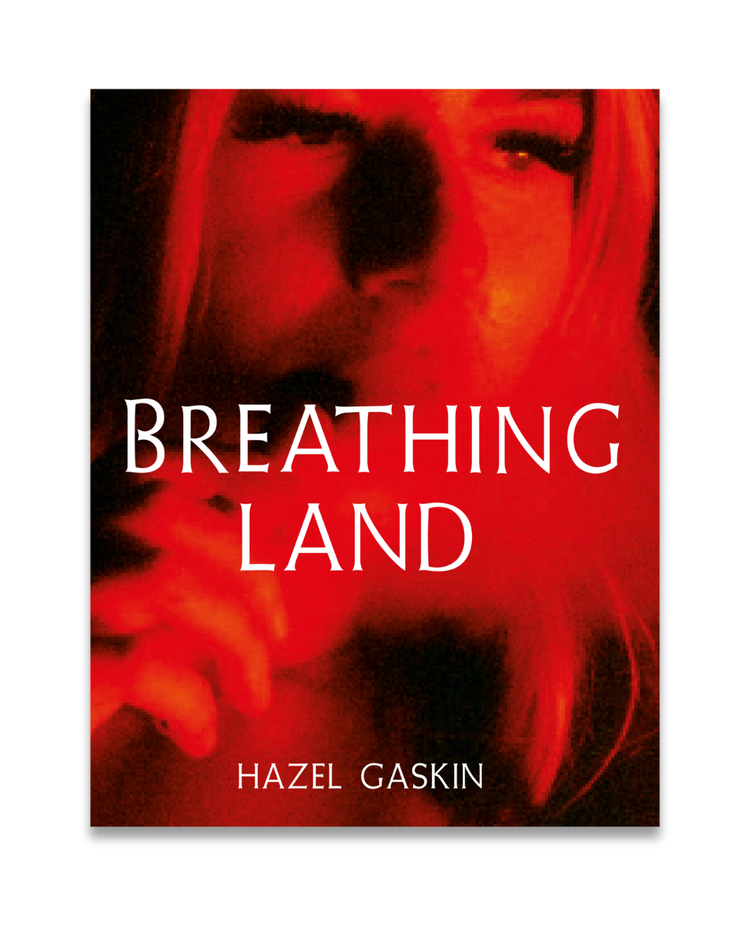
Breathing Land, Hazel Gaskin
Description
More
Less
More
Less
"'Breathing Land' is a project that has only touched on part of a much larger story. Belfast is a city still marked by its history but also defined by resilience and transformation. The young people I have met through this work approach their environment with openness
and curiosity. They do not deny the city’s divisions, but they are learning to navigate and
reinterpret them in ways that point toward a more connected future.
More than twenty-five years after the Good Friday Agreement of 1998, Belfast remains a
city shaped by both its past and its ongoing transformation. Although significant progress
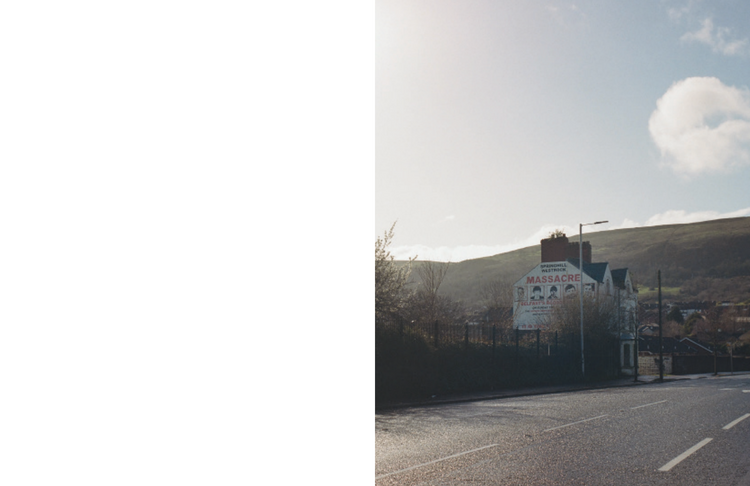
has been made, traces of division still influence how people live, move, and see themselves within the city. Physical divisions appear through the presence of peace walls that continue to mark the boundaries between Nationalist and Unionist communities. These barriers, in the form of walls, gates, and fences known as peace walls or interfaces, have become deeply symbolic features of Belfast’s landscape. Throughout this project, I documented these barriers and the complex social meanings they hold.
My project explored how young people experience and interpret life in a city that carries
strong visible reminders of its history. Drawing on Doreen Massey’s concept of space as
something shaped by interactions and relationships that extend beyond a specific place,
I experience Belfast as a dynamic environment where the past and present continually
intersect. The city’s geography and its social fabric are deeply connected, and young people must navigate this complexity as they form their sense of identity and belonging. Nearly one hundred interfaces still exist, and the government’s target to remove them by 2023 has not yet been met. Among the young people I have engaged with, there is an awareness of division, but also a strong desire to move beyond it.
My own process of research has been a journey toward understanding how the city is seen and felt by its younger generation. I wanted to look beyond the familiar visual clichés of Belfast, the murals, flags, and walls, and instead consider how young people move through these environments every day. But these symbols woven throughout the landscape are hard to overlook. The younger generation has grown up after the conflict and views it as distant, something that belongs more to their parents’ generation than their own. While they recognise the ongoing presence of division, they also speak about the city’s quiet determination to build connections rather than maintain boundaries.
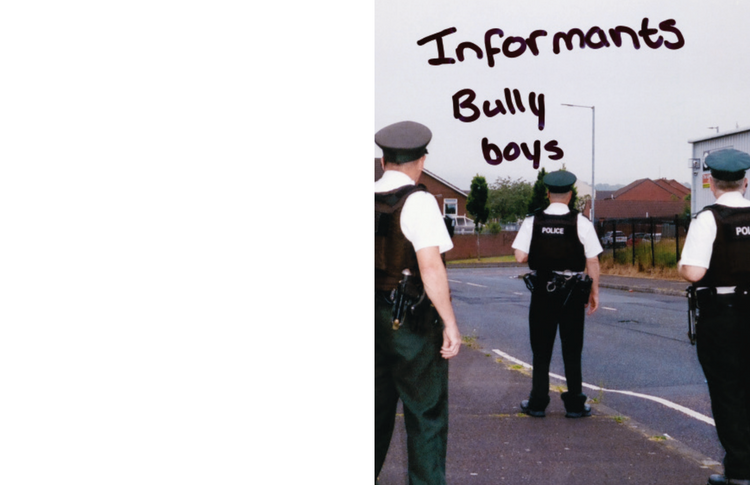
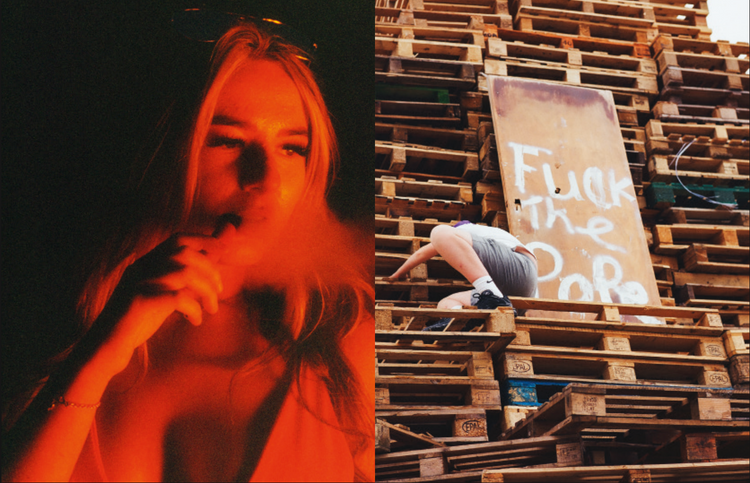
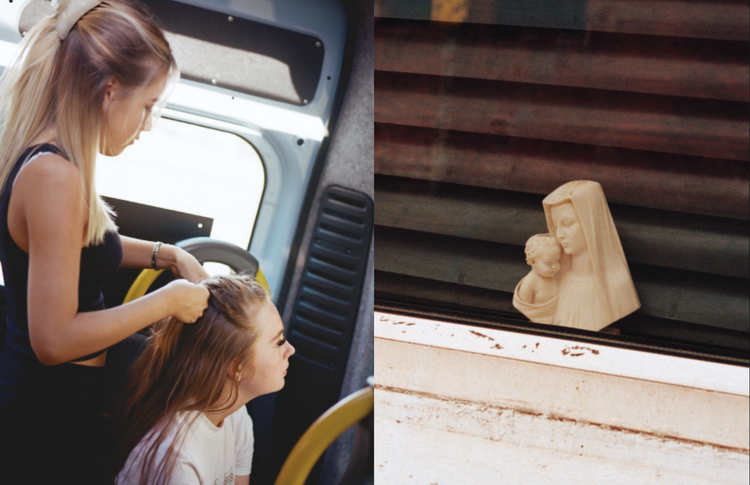
Belfast itself is changing in visible ways. It is becoming more diverse, both demographically and culturally, with new communities and voices adding to the city’s evolving identity. The visual element of my research endeavoured to reflect this complexity. Although I initially avoided stereotypical imagery, I eventually included photographs of Twelfth of July bonfires, murals, police officers, and tri-coloured flowers, elements that still shape the city’s visual landscape. Feedback from young people I worked with encouraged me to include this type of imagery, as it reflects the city’s identity.
In many Unionist areas, territorial symbols such as Union Jacks, Ulster flags, and painted
kerbstones remain visible. Yet as some of these fade or lose their prominence, they reveal
subtle signs of change. For younger generations, these symbols do not carry the same
emotional weight as they once did. My visual work has focused on these quieter shifts, the overlooked moments and details that suggest new ways of living with and beyond division." (Words by Hazel Gaskin)
Description
"'Breathing Land' is a project that has only touched on part of a much larger story. Belfast is a city still marked by its history but also defined by resilience and transformation. The young people I have met through this work approach their environment with openness
and curiosity. They do not deny the city’s divisions, but they are learning to navigate and
reinterpret them in ways that point toward a more connected future.
More than twenty-five years after the Good Friday Agreement of 1998, Belfast remains a
city shaped by both its past and its ongoing transformation. Although significant progress
has been made, traces of division still influence how people live, move, and see themselves within the city. Physical divisions appear through the presence of peace walls that continue to mark the boundaries between Nationalist and Unionist communities. These barriers, in the form of walls, gates, and fences known as peace walls or interfaces, have become deeply symbolic features of Belfast’s landscape. Throughout this project, I documented these barriers and the complex social meanings they hold.
My project explored how young people experience and interpret life in a city that carries
strong visible reminders of its history. Drawing on Doreen Massey’s concept of space as
something shaped by interactions and relationships that extend beyond a specific place,
I experience Belfast as a dynamic environment where the past and present continually
intersect. The city’s geography and its social fabric are deeply connected, and young people must navigate this complexity as they form their sense of identity and belonging. Nearly one hundred interfaces still exist, and the government’s target to remove them by 2023 has not yet been met. Among the young people I have engaged with, there is an awareness of division, but also a strong desire to move beyond it.
My own process of research has been a journey toward understanding how the city is seen and felt by its younger generation. I wanted to look beyond the familiar visual clichés of Belfast, the murals, flags, and walls, and instead consider how young people move through these environments every day. But these symbols woven throughout the landscape are hard to overlook. The younger generation has grown up after the conflict and views it as distant, something that belongs more to their parents’ generation than their own. While they recognise the ongoing presence of division, they also speak about the city’s quiet determination to build connections rather than maintain boundaries.
Belfast itself is changing in visible ways. It is becoming more diverse, both demographically and culturally, with new communities and voices adding to the city’s evolving identity. The visual element of my research endeavoured to reflect this complexity. Although I initially avoided stereotypical imagery, I eventually included photographs of Twelfth of July bonfires, murals, police officers, and tri-coloured flowers, elements that still shape the city’s visual landscape. Feedback from young people I worked with encouraged me to include this type of imagery, as it reflects the city’s identity.
In many Unionist areas, territorial symbols such as Union Jacks, Ulster flags, and painted
kerbstones remain visible. Yet as some of these fade or lose their prominence, they reveal
subtle signs of change. For younger generations, these symbols do not carry the same
emotional weight as they once did. My visual work has focused on these quieter shifts, the overlooked moments and details that suggest new ways of living with and beyond division." (Words by Hazel Gaskin)
You May Also Like